
Mould on your cold room door seals that you cannot remove? Do you have to empty and switch off the entire cold room every time it needs a thorough clean?
If you manage a restaurant, supermarket, butcher’s shop, fishmonger’s shop or food-processing facility, your cold room is probably one of the areas where you lose the most time and money without even realising it.
Whenever it needs to be cleaned properly, the cold room has to stop operating. And every shutdown comes at a cost: staff hours, products that need to be moved, the refrigeration system having to return to temperature, and the risk of being unprepared for an HACCP inspection.
Refrigeration Preserves Food, but It Does Not Clean
Mould, unpleasant odours, frost, ice and organic residues accumulate on walls, seals, shelving and in corners that traditional cleaning methods often fail to reach. Every build-up represents a hygiene issue that will eventually become costly.
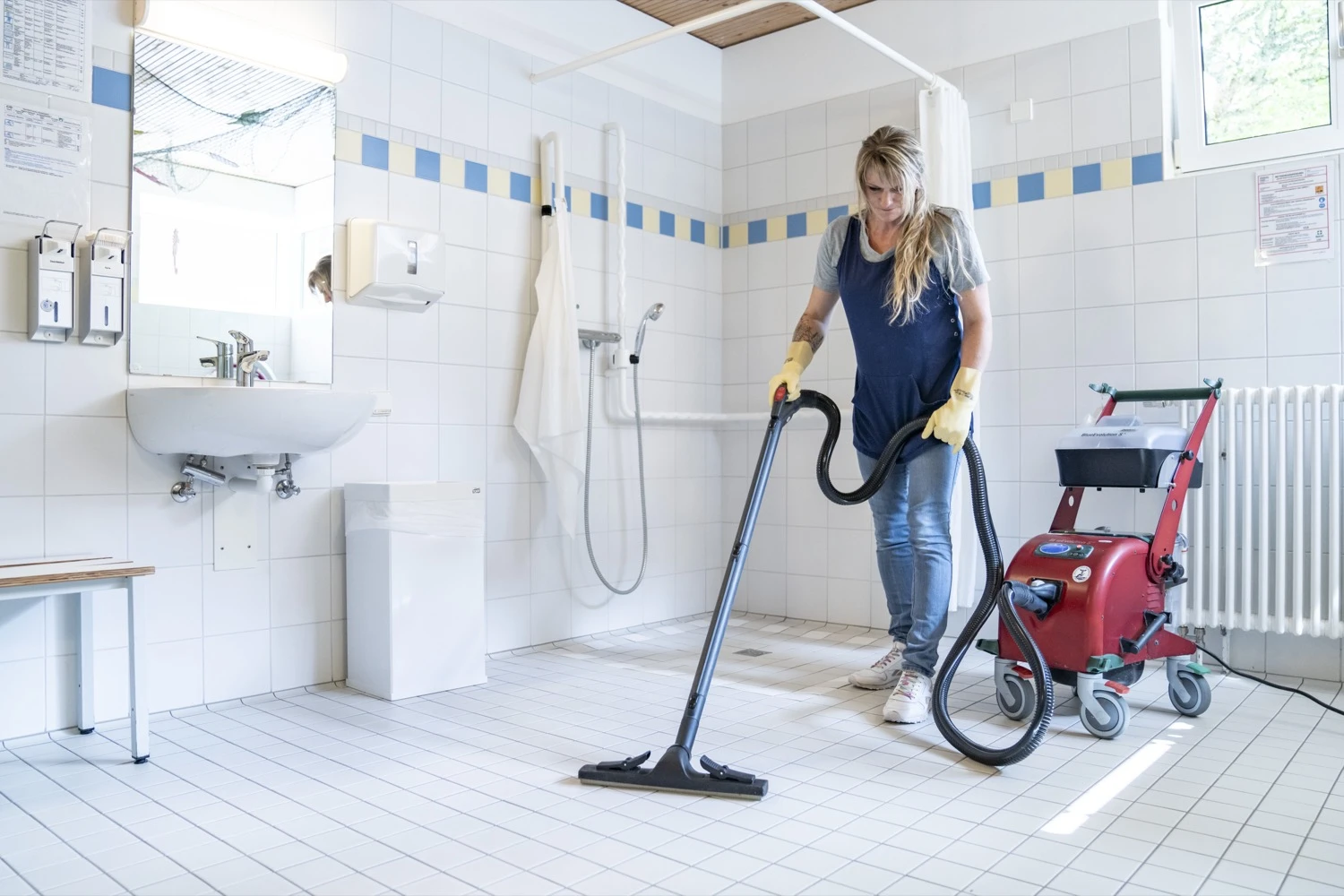
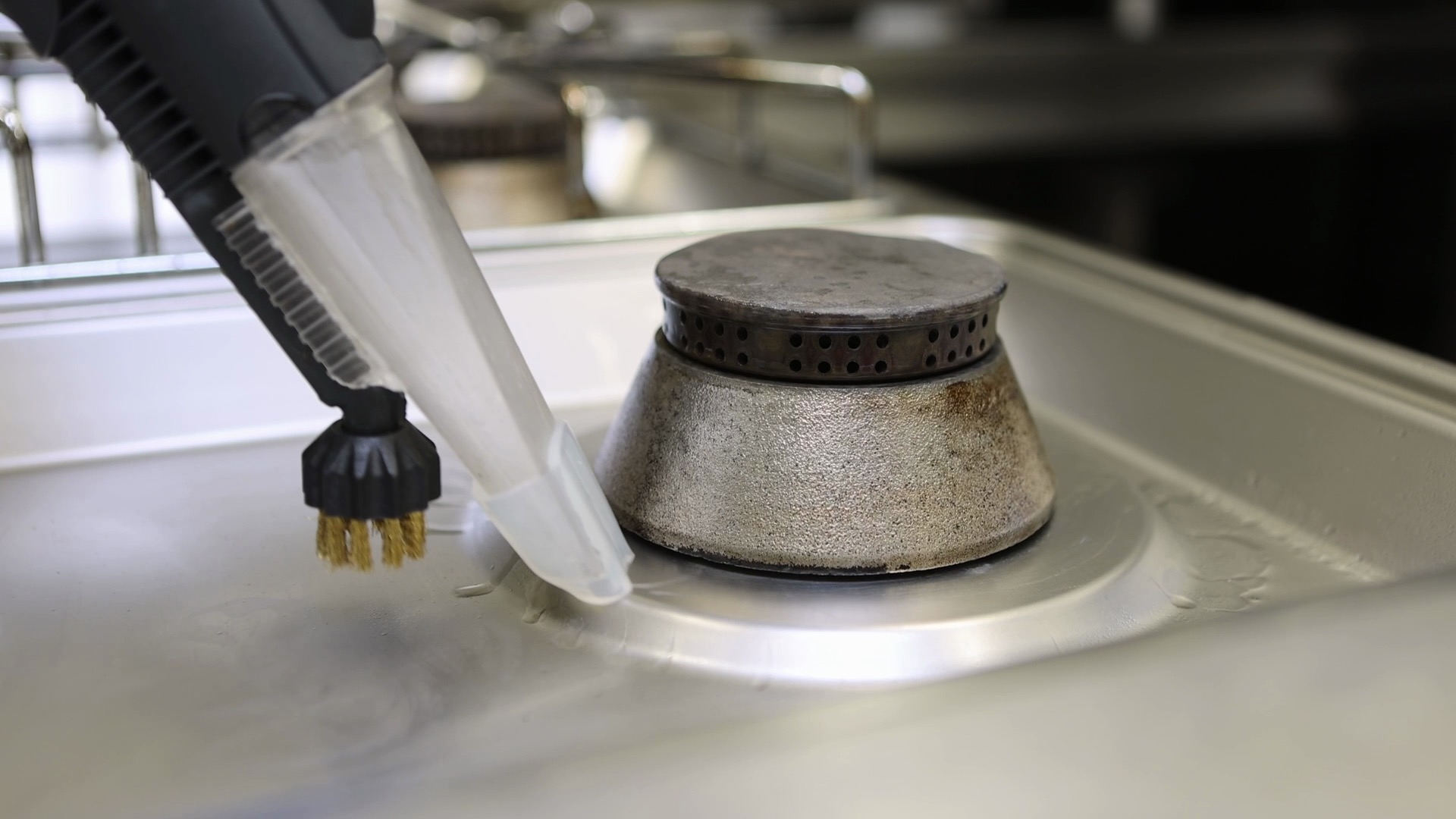
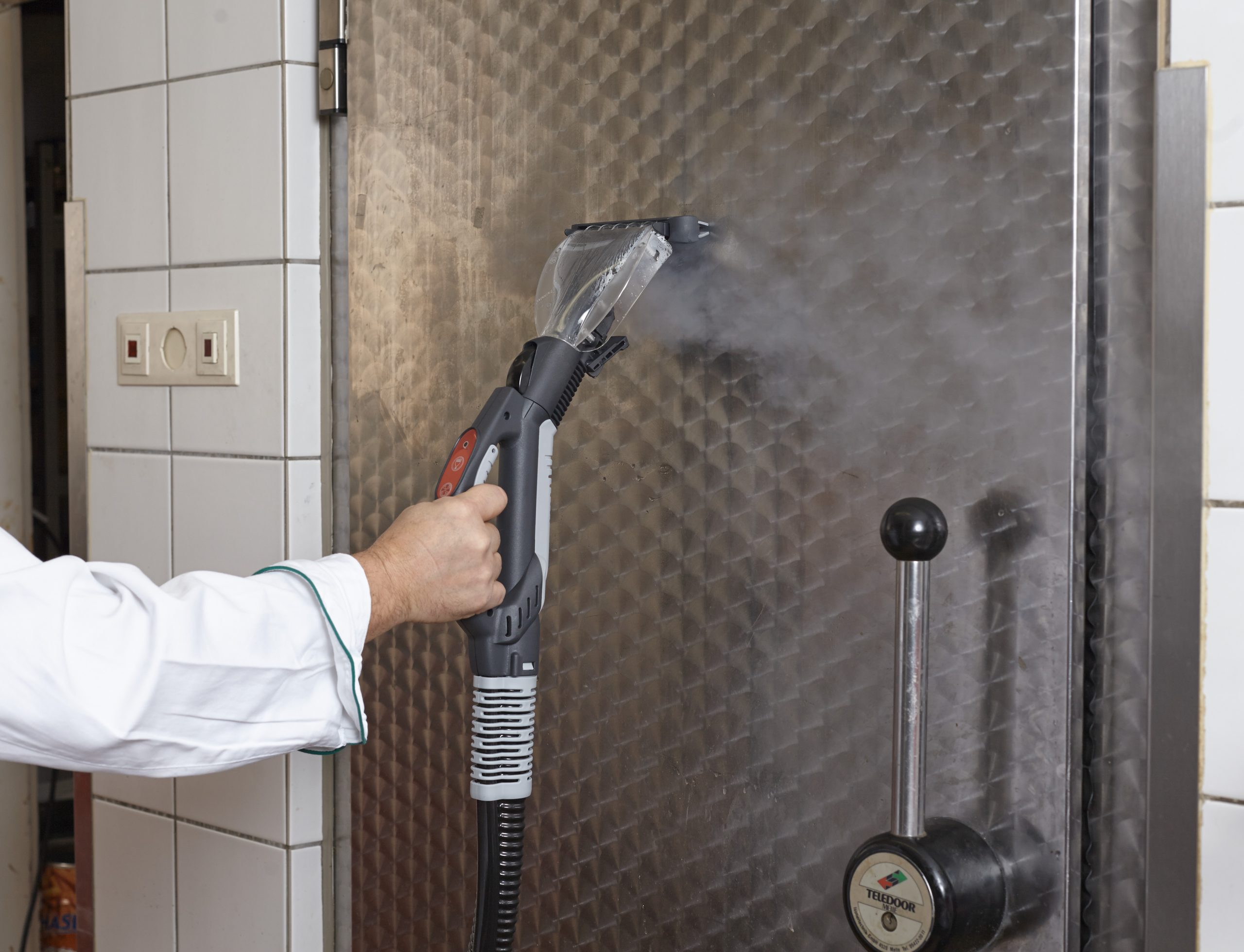
At TPA, we address the problem at its source. High-temperature steam dissolves dirt and contamination, while the integrated vacuum system immediately removes dirt and moisture in a single process.
The cleaning can also be carried out without switching off the cold room. Our steam technology operates even in refrigerated environments meaning that you do not have to empty the entire room and wait for it to return to temperature.
With steam temperatures of up to 180°C, surfaces can be deep-cleaned and sanitised in areas where water and detergent would normally require several separate steps.
Steam temperatures of up to 180°C and pressure of up to 10 bar.
Temperature and pressure work together to deep-clean surfaces. What normally requires several passes with water and detergent can be completed in a single process with our technology.
Mould on Door Seals: A Serious Warning Sign That Must Not Be Ignored
Mould is not merely an aesthetic defect.
It is the first sign that conditions inside your cold room may allow contamination of the products stored there. During an inspection, it can also lead to a formal non-compliance finding.
Mould commonly appears on seals, ceilings, joints and poorly ventilated areas, where moisture, condensation and food residues remain undisturbed.
For anyone managing the facility every day, this creates several very practical problems:
- Hygiene risks affecting fresh products and sensitive raw materials.
- Unpleasant odours that can transfer to food.
- Contamination and the possible disposal of products.
- Problems during HACCP inspections, with all the consequences they may involve.
In high-turnover environments such as supermarkets, professional kitchens, fishmongers and butcher’s shops, mould can spread faster than staff can control it manually. This is where steam at up to 180°C helps remove surface mould and organic residues without filling the cold room with chemical detergents.

Stop Worrying About HACCP Inspections Every Time Your Cold Room Door Is Opened
How easy is it today to demonstrate during an inspection that your cold room has actually been cleaned properly?
Your current cleaning protocol probably works. It has always been done that way and, eventually, the cold room is clean.
The real issue is not whether the method works, but how much it costs to maintain and how easy it is to document when an inspection takes place.
Why Traditional Methods Work Against You
Chemical detergents, rinsing, residual moisture, long drying times, seals and joints that remain weak points: traditional cleaning involves a long sequence of steps.
With TPA technology, the use of detergents can be reduced by up to 100% in compatible applications.
In an enclosed and refrigerated environment, using fewer chemicals means fewer residues, fewer unpleasant odours and a cleaning procedure that is easier for staff to follow consistently.
Up to 100% fewer chemical detergents in compatible applications.
Using fewer chemicals means fewer residues and odours inside the cold room, fewer rinsing steps and a simpler procedure for staff to follow correctly.
The Traditional Method vs the TPA Revolution
Have you ever calculated how many working hours are required to clean your cold room? And how much time does it take to switch it off and bring it back to operating temperature after a thorough clean?
What Happens with Traditional Cleaning: Multiple Steps That Stop the Entire Operation
Cleaning a cold room using traditional methods is not simply a matter of washing it.
It is a chain of activities that can bring operations to a standstill: empty the cold room, move the stored products, switch off the refrigeration system, remove frost and ice, wash the surfaces, rinse them, dry the room, bring the cold room back to temperature and reload all the products.
That means at least five separate operational stages, usually carried out at the end of a shift or after the business has closed. One or more members of staff remain occupied with cleaning instead of focusing on activities that generate revenue. Multiply those working hours by the number of times the cold room requires deep cleaning during the year. It becomes a hidden cost that may never appear clearly in your financial reports, but that you pay every single time.
Ice and frost make the situation even worse. They reduce airflow and force the refrigeration system to work harder, increasing energy consumption and accelerating equipment wear.
What Changes with TPA: One Integrated Steam and Vacuum Process
With our process, water consumption can be reduced by up to 93%. This means fewer rinsing stages, less residual moisture and surfaces that become available again in a fraction of the time. Staff can return to their normal duties sooner, while the cold room can return to operation more quickly.
Up to 93% lower water consumption compared with traditional methods, through one integrated steam and vacuum process.
Less water to use, dispose of and dry means direct savings and reduced downtime.
The benefit is therefore not limited to hygiene. It also affects staff time, energy consumption and operating costs. In other words, it directly improves margins.
Where TPA Technology Can Be Used
Our steam technology can be used on accessible and compatible areas of the cold room, including: floors, internal walls, shelving, thresholds, handles, door seals, corners and joints.
Accessible components of refrigeration systems. These are exactly the areas where costly hygiene problems tend to develop.
The system removes organic dirt, food residues, grease, surface mould and contamination while reducing the use of water, detergents and waiting time.
The result is a cleaner, more controlled cold room that supports stronger HACCP management without slowing down the working day.

Have You Ever Calculated How Many Hours It Takes to Clean Your Cold Room?
The cold room is the refrigerated heart of any food business.
When it is neglected, the problems do not remain inside the room. They affect hygiene, product quality, energy bills, HACCP inspections and staff organisation. And they do so silently, every day.
With TPA, cleaning becomes more sustainable, more controlled and, above all, less expensive because it reduces the hidden costs of the method currently being used.
The figures make the benefits tangible:
- Steam temperatures of up to 180°C
- Pressure of up to 10 bar
- Operation in refrigerated environments
- Up to 93% lower water consumption.
- Up to 100% fewer chemical detergents.
- Fewer cleaning steps compared with traditional methods.
- Stronger HACCP management that is easier to document.
- Less operational downtime caused by emptying, defrosting and bringing the cold room back to temperature.
Find Out How Much You Are Spending Without Realising It
The real question is not whether your cold room is clean. The real question is how much it currently costs you to keep it clean in terms of labour hours, water, detergents and downtime.
Do you really know?
With TPA, you clean faster, reduce water and chemical consumption and minimise the downtime associated with emptying, defrosting and restoring the correct temperature.