Benefits of industrial steam cleaning in food production facilities
In food production facilities, using a steam cleaning machine has become a strategic decision that directly affects food safety and sanitation, production continuity, and operational cost control. Sanitation is a regulatory requirement and a structural process that influences product quality, brand reputation, and overall profitability.
Meat processing plants, dairy facilities, bakeries, pasta manufacturers, beverage producers, and fruit and vegetable processors operate in environments where cross contamination, organic residues, and microbial growth can compromise the entire production cycle. In this context, adopting professional cleaning equipment based on steam and suction introduces a model of cleaning and sanitization that is measurable, controllable, and aligned with HACCP and NSF standards.
Food safety and sanitation requirements
Food safety and sanitation require documented, traceable, and verifiable procedures. HACCP protocols impose the identification of critical control points and the definition of preventive measures to avoid contamination. In the United States and Canada, compliance with NSF requirements is an additional benchmark for certifying equipment used in processing plants.
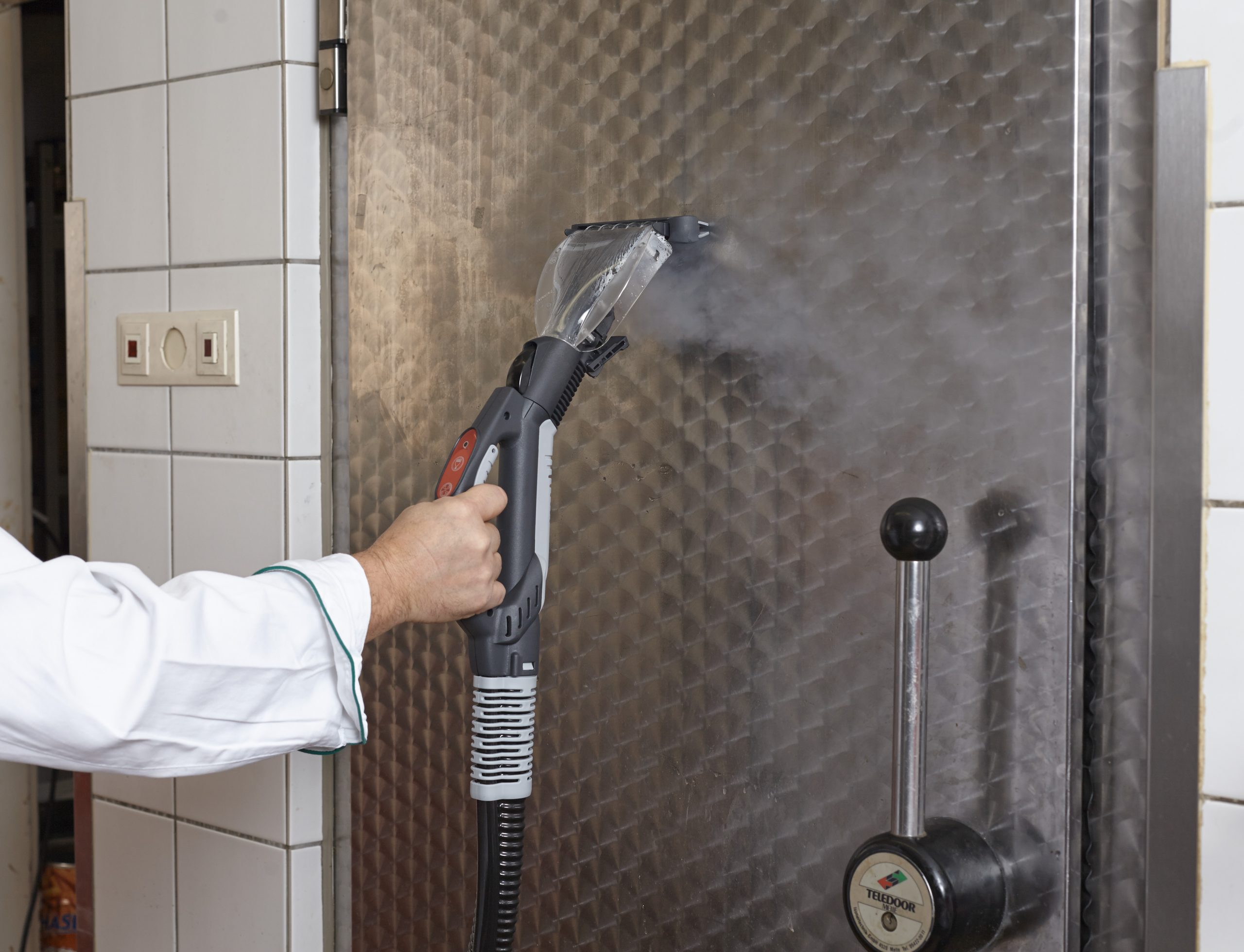
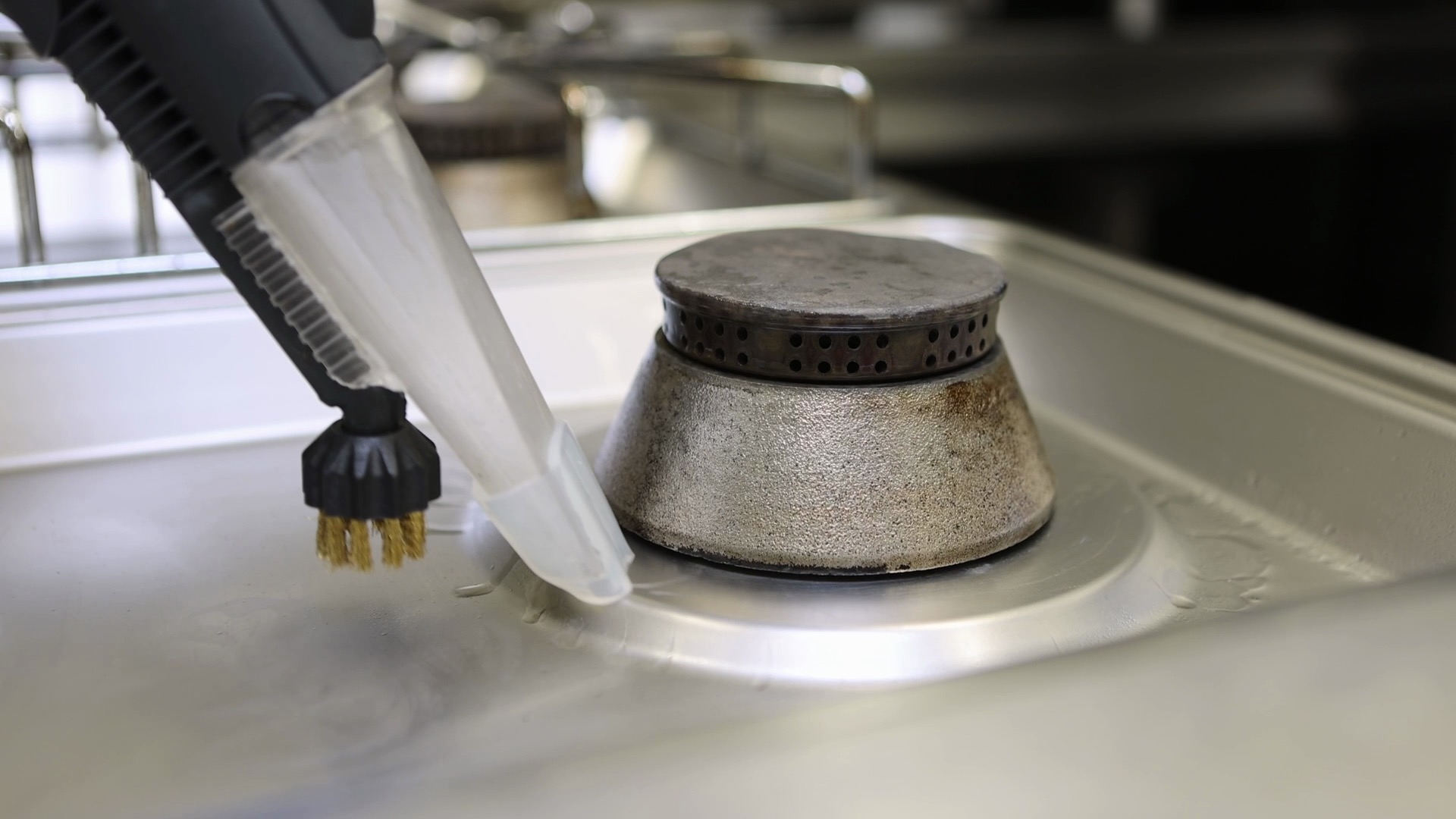
A steam cleaning machine operating at high temperature allows direct intervention at critical control points, reducing microbial load on surfaces, conveyor belts, cold rooms, pasteurizers, packaging lines, and processing equipment. Industrial steam cleaner systems penetrate deep into joints and difficult areas, reducing the need for dismantling production lines.
When integrated with suction and water filtration, the system retains removed contaminants, limits aerosol dispersion, and leaves surfaces dry and ready for immediate restart.

Cleaning and sanitation as an operational lever
In the food industry, industrial equipment cleaning directly impacts downtime. Traditional methods require large volumes of water, chemical detergents, drainage systems, and extended labor hours. This approach generates direct and indirect costs that are rarely analyzed in a structured way.
A professional steam cleaner with suction changes the operational model. The cycle remains constant. Steam at high temperature dissolves residues. Immediate suction removes debris and moisture. Water filtration captures contaminants. Chemical detergents are eliminated.
This structure allows cleaning with steam, extraction, and drying in a single pass, reducing average post-sanitation downtime and improving Overall Equipment Effectiveness.
Operational KPIs and cost reduction
Implementing industrial steam cleaner systems based on steam and suction technology enables the monitoring of measurable indicators.
- Water consumption can be reduced by up to 93%. Measurable KPIs include liters per cleaning cycle, water cost per square meter, and wastewater disposal costs. Economic impact translates into lower load on treatment systems and reduced energy for water heating.
- Downtime decreases due to immediate surface drying. KPIs include average downtime per sanitation cycle, number of cycles per shift, and OEE variation. The result is increased production availability and higher annual capacity without additional staffing.
- Process standardization improves when cleaning with steam follows a defined protocol. Variability between operators decreases. KPIs include internal nonconformities, corrective actions after audits, and rework rates. Quality stability increases.
- Human error declines due to the elimination of chemical mixing and dosing. Incidents linked to hazardous substances decrease. HACCP deviations become less frequent. Training costs related to chemical handling are reduced.
- Operating expenses are directly affected. Water, chemicals, disposal, labor hours, and energy represent structural budget items. ROI can be measured over 12, 24, and 36 months by evaluating direct and indirect savings.
Contamination reduction and brand protection
Food safety and sanitation extend beyond regulatory compliance. Preventing product recalls and reputational damage is essential. Quality KPIs include microbiological swab results, ATP testing before and after intervention, and recall frequency.
Industrial steam cleaner systems combined with UV C technology, as integrated in TPA systems, contribute to reducing pathogens such as Escherichia coli, Salmonella, and Listeria. The combined effect of high temperature and germicidal irradiation strengthens food hygiene levels across processing facilities.
Lower contamination risk protects brand equity, reduces legal exposure, and supports improved insurance positioning.
Impact on CAPEX and equipment lifespan
Industrial steam cleaner systems that rely exclusively on water and steam reduce surface aggressiveness. Lower exposure to corrosive chemicals contributes to extended lifespan of seals, stainless steel components, and mechanical parts.
Relevant KPIs include frequency of extraordinary maintenance, component replacement rates, and wear of production surfaces. Financial impact appears in reduced early depreciation and lower replacement investments.

TPA steam technology for the food industry
TPA steam cleaning machine systems represent an evolution beyond conventional industrial steam cleaner equipment.
Cleaning with steam in food environments requires stable and verifiable technical parameters. TPA systems operate at high temperatures and constant pressure to dissolve organic residues, grease, and biofilm from complex surfaces. Integrated suction removes dissolved contaminants and residual moisture immediately, leaving surfaces dry and production ready.
The distinctive element is the patented Rain System water filter. Extracted particles are trapped in water and remain confined without reentering the environment. This feature is critical in food processing facilities where aerosol management and cross contamination directly influence food safety and sanitation outcomes.
The water filtration system integrates UV C germicidal technology designed to inactivate up to 99.9% of bacteria and pathogens. TPA professional steam cleaner systems with UV C are developed specifically for pathogen reduction in food processing environments, maintaining consistency with HACCP protocols and international food hygiene standards.
TPA technology is engineered for the food industry. It integrates steam, suction, filtration, and microbial inactivation into a standardized process. The result is measurable cleaning and sanitization with direct impact on operational KPIs, OPEX reduction, and brand protection.
TPA offers systems specifically designed for the food and beverage industry.

Steam Commander is a high performance industrial steam cleaner designed for continuous applications, delivering constant high pressure and temperature to ensure effective cleaning and sanitization in demanding production environments.

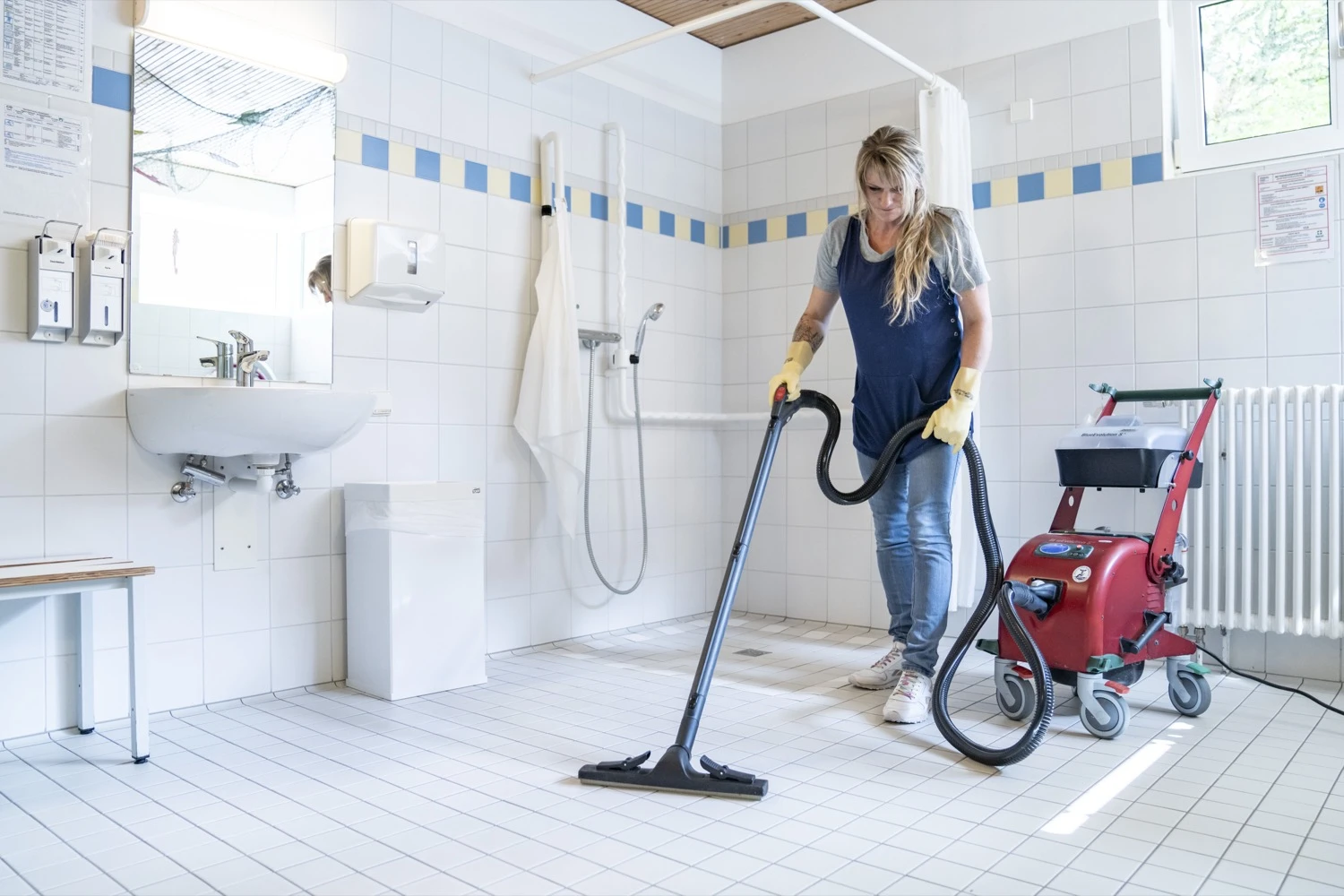
Blue Evolution S+ and Blue Evolution XL+ three phase professional steam cleaner systems provide high output, pressure up to 10 bar, and temperatures up to 180 degrees Celsius. Extracted particles are conveyed into the patented water filter and inactivated by UV C action.
Across all models, using a steam cleaning machine means leaving surfaces clean, sanitized, and dry, ready for immediate production restart.

A strategic vision for executive leadership
In industrial environments, sanitation is not an accessory cost. It is a structural budget component. Introducing an integrated steam cleaning machine system with suction reduces OPEX, improves OEE, and mitigates nonconformity risk.
Return on investment is not limited to water savings. It extends to the entire production cycle. Reduced downtime, fewer reworks, fewer recalls, and lower legal exposure redefine sanitation as a measurable business function.
TPA is a professional steam cleaner system integrating risk management, cost control, and operational efficiency. In a context where every minute of downtime carries a measurable cost, sanitation must support production continuity.
If the objective is to transform sanitation into a standardized and measurable process, contact TPA to schedule an on site demonstration and evaluate performance, downtime impact, and financial benefits.
Frequently Asked Questions
How does a steam cleaning machine improve food safety and sanitation?
A steam cleaning machine reduces microbial load and limits cross contamination. Integrated suction removes residues and moisture in the same cycle, improving audit results and protecting brand value.
What financial advantages does professional cleaning equipment provide?
Professional cleaning equipment reduces OPEX through lower water, chemical, and energy consumption. Water savings can reach up to 93%, while labor and downtime costs decrease.
Does a professional steam cleaner with suction improve OEE?
Yes. Downtime is reduced and equipment availability increases. Cleaning, sanitizing, and drying occur in one process, generating more productive hours.
Is industrial steam cleaner sanitation compliant with HACCP?
Yes. Industrial steam cleaner processes standardize sanitation and reduce operator variability. Chemical dosing errors decline, nonconformities decrease, and audits become more efficient.
What is the ROI of a steam cleaning machine system in food production?
ROI is measured through operational cost reduction, OEE improvement, and risk mitigation. Lower water use, fewer chemicals, reduced downtime, and lower legal exposure generate measurable returns over 12 to 36 months.